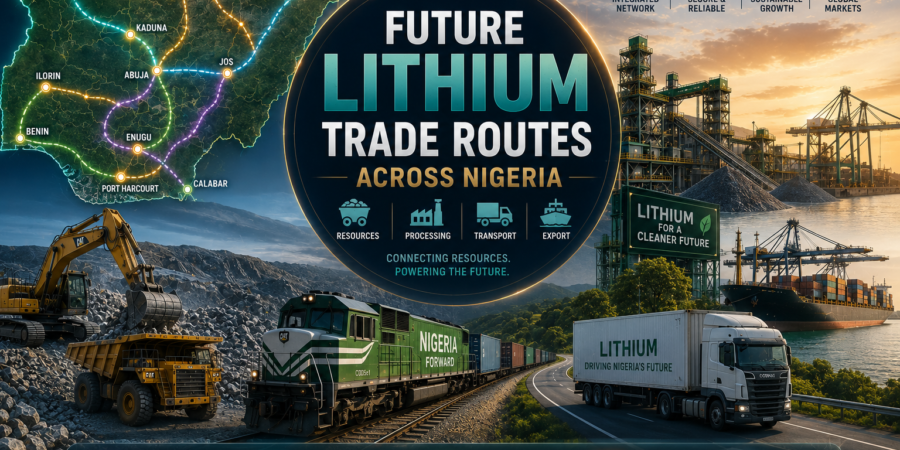
Trade routes have shaped civilizations for thousands of years. From the ancient trans-Saharan caravan networks to modern maritime shipping lanes, commerce has always followed routes that connect resources with markets. Every major commodity has depended on transportation corridors capable of moving goods efficiently between producers and consumers. Lithium is no different. As Nigeria’s battery-mineral industry develops, a new generation of trade routes is beginning to emerge. These routes will not simply connect mines with warehouses or warehouses with ports. They will form the commercial backbone of an industry expected to play an increasingly important role in the country’s mining economy.
The future of Nigeria’s lithium sector will therefore depend not only on where lithium is mined but also on how it moves across the country. This distinction is important. Many discussions about lithium focus primarily on geology, exploration, and mineral resources. While these subjects remain fundamental, they represent only the beginning of the commercial journey. Once ore leaves a mining site, it enters a network of transportation systems, aggregation centres, logistics providers, warehouses, procurement hubs, processing facilities, financial institutions, and export channels. Together, these components create trade routes. In the years ahead, these routes are likely to become more structured, more sophisticated, and more commercially integrated than they are today.
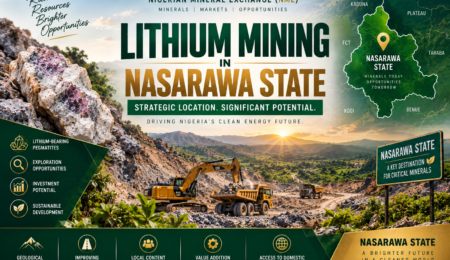
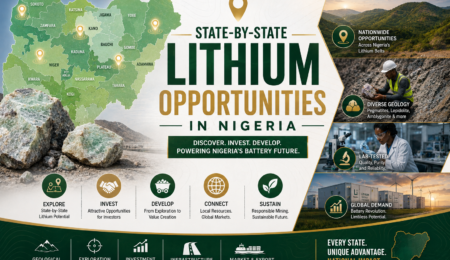
Northern Nigeria is expected to remain the primary production zone within this evolving system. States such as Nasarawa, Niger, Kaduna, Kogi, and Plateau are already attracting attention because of their geological potential and growing participation in the lithium economy. Rather than functioning as isolated mining locations, these states are gradually becoming interconnected through commercial relationships that support the movement of mineral products. As exploration expands and production grows, stronger commercial links between these regions are likely to emerge. This evolution will create regional trade corridors capable of supporting larger procurement programmes and more consistent supply.
Abuja is expected to occupy an increasingly important position within these future trade routes. Although the city is not a mining centre, it possesses many of the characteristics required of a commercial coordination hub. Buyers, investors, consultants, logistics providers, financial institutions, mining companies, and government agencies already interact extensively within the Federal Capital Territory. As lithium commerce expands, Abuja is well positioned to become one of the principal locations where procurement decisions are made, contracts are negotiated, supplier relationships are managed, and commercial intelligence is exchanged. In many respects, future lithium trade routes may converge commercially in Abuja before extending toward domestic processors or export markets.
Aggregation will become another defining feature of future trade routes. Nigeria’s lithium production is expected to continue originating from multiple mining communities rather than from a small number of giant operations. This makes aggregation essential. Future trade routes will likely incorporate strategically located aggregation centres where material from different mining regions can be received, documented, sampled, consolidated, and prepared for onward transportation. These facilities will improve efficiency while making procurement easier for industrial buyers seeking larger and more consistent volumes.
Warehousing will also play a more prominent role. As commercial activity increases, inventory management will become increasingly important. Warehouses positioned along major transportation corridors will help support stock visibility, quality management, scheduling flexibility, and procurement planning. Rather than functioning solely as storage locations, future warehouses may become commercial nodes where buyers inspect inventory, conduct quality verification, negotiate purchases, and coordinate shipments.
Digital technology is also expected to reshape future trade routes. The movement of lithium will increasingly be supported by the movement of information. Digital inventory systems, supplier databases, logistics platforms, market intelligence tools, shipment tracking, electronic documentation, and procurement management systems will likely become standard components of the industry’s commercial infrastructure. The future lithium trade route will therefore exist in both physical and digital form. One will move minerals. The other will move information. Both will be equally important.
International connectivity will become another defining characteristic. As Nigeria strengthens its position within global battery-mineral supply chains, future trade routes will increasingly link domestic production with international procurement networks. Commodity traders, battery-material manufacturers, processors, and industrial buyers will seek efficient pathways through which Nigerian lithium can enter regional and global markets.
The quality of these trade routes will influence how international buyers perceive Nigeria as a sourcing destination. Efficient commercial corridors improve competitiveness. Reliable logistics strengthen buyer confidence. Organized procurement systems encourage long-term commercial relationships. The future trade route is therefore more than a transportation pathway. It is part of Nigeria’s international commercial reputation.
Regional economic integration may also influence future development. As trade across West Africa continues to expand, opportunities could emerge for lithium supply chains to connect more closely with regional manufacturing, logistics, and industrial markets. Such integration would strengthen Nigeria’s position as both a producer and a commercial gateway within the African battery-mineral economy.
This possibility highlights another important reality. Future trade routes will not simply connect locations. They will connect industries. Mining will connect with logistics. Logistics will connect with finance. Finance will connect with manufacturing. Manufacturing will connect with international markets. Each connection will create additional economic value. This is why trade routes should be viewed as strategic infrastructure rather than merely transportation systems. Countries that organize efficient trade corridors often become more competitive within international commodity markets. Nigeria has the opportunity to build such corridors while its lithium industry is still developing.
Perhaps the greatest opportunity lies in designing these routes deliberately rather than allowing them to emerge without coordination. Planning logistics, aggregation, warehousing, market intelligence, digital infrastructure, and commercial services together will create a stronger and more resilient supply chain than focusing on transportation alone. This integrated approach is likely to define the most successful lithium economies of the future.
The Nigerian Mineral Exchange is actively supporting the development of these future trade routes by connecting miners, suppliers, buyers, aggregators, warehouse operators, logistics providers, processors, investors, and procurement organizations across Nigeria’s emerging lithium ecosystem. For international mining companies, battery-material manufacturers, commodity traders, industrial buyers, processors, and investors sourcing lithium from Nigeria, NME provides supplier identification, procurement coordination, market intelligence, logistics support, supplier verification, aggregation access, due diligence, and comprehensive supply-chain visibility.
NME also serves as a Foreign or International Buyer Representative in Nigeria, helping international organizations establish trusted local market presence through supplier engagement, commercial negotiations, sourcing coordination, logistics management, procurement support, market-entry advisory services, and on-ground representation throughout Nigeria’s lithium-producing regions.
At the same time, NME works closely with mining communities, suppliers, warehouse operators, aggregators, transport companies, and commercial partners to strengthen structured procurement networks and facilitate long-term relationships between Nigerian suppliers and international buyers. Organizations seeking supplier verification, procurement coordination, logistics support, due diligence, aggregation partnerships, market-entry guidance, or local buyer representation can engage NME directly through WhatsApp (+2348130799304).
The future of Nigeria’s lithium industry will not be shaped by mineral deposits alone. It will be shaped by the routes that connect those deposits to the world. The countries that build efficient commercial corridors today will be the ones that capture the greatest value from tomorrow’s battery economy. For Nigeria, the opportunity is not simply to mine lithium. It is to build the trade routes that make lithium commerce globally competitive.
Related Articles
- Source Lithium Ore in Nigeria
- Sell Lithium Ore in Nigeria
- How to Source Lithium Ore in Nigeria in 2026
- How to Secure Large-Scale Lithium Ore Supply in Abuja: The NME Industrial Sourcing Guide
- Northern Nigeria Lithium Trade Ecosystem
- Why Lithium Investors Are Watching Northern Nigeria
- How Lithium Ore Is Measured and Verified
- Can Nigeria Become Africa’s Lithium Powerhouse?
- Why Local Partnerships Matter in Lithium Trade
- Lithium Procurement Strategy for Foreign Buyers in Nigeria
- Lithium and Electric Vehicle Demand
- Northern Nigeria’s Lithium Mining Corridors
- Lithium Trade in Kano State
- Niger State and the Nigerian Lithium Economy
- Lithium and Energy Storage Technologies
- Nigeria’s Emerging Battery Minerals Economy