
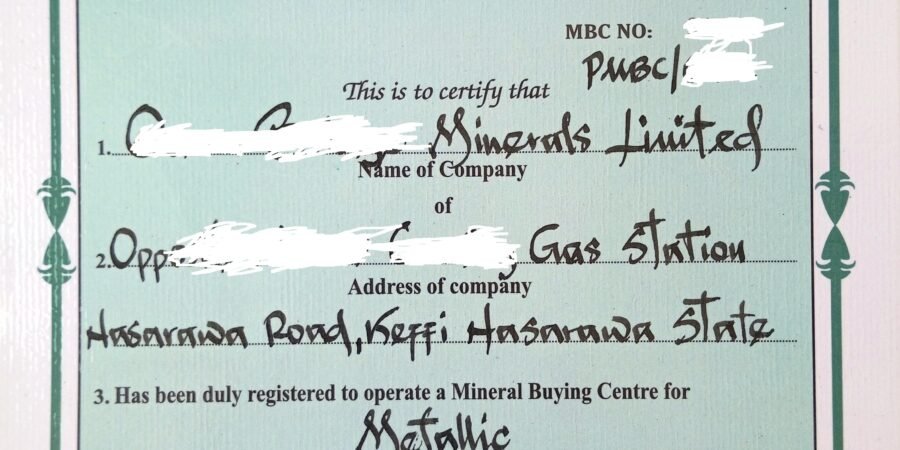
Nigeria’s mining sector offers lucrative opportunities for investors and businesses seeking to trade in minerals. One essential part of the mineral supply chain is the Private Mineral Buying Center (PMBC)—a licensed facility where minerals are bought, processed, and stored before sale.
If you’re interested in setting up a PMBC, this guide will walk you through the registration requirements, specific facility needs for different mineral categories, operator obligations, and renewal procedures.
General Requirements for Registering a PMBC
To apply for a Private Mineral Buying Center license, the following documents and requirements must be met:
- Application Letter on company letterhead
- Completed PMBC Application Form (in triplicate)
- Corporate Affairs Commission (CAC) Documents (or Cooperative Certificate and Bye-laws for cooperatives)
- Current Tax Clearance Certificate (Cooperatives are exempt)
- Credentials and CV of Section Manager (e.g., Mining Engineer, Geologist, Metallurgist)
- Processing Fee: ₦150,000.00 (to be paid via the TSA)
- Inspection of Premises and Equipment by the relevant authorities
📘 The Nigeria Mineral Trading & Licensing Blueprint (2026 Edition)
If you are serious about buying, selling, or trading minerals legally in Nigeria, you cannot afford to rely on guesswork, outdated advice, or hearsay. The regulatory environment is tightening fast, and costly mistakes now lead to permit denials, seizures, or permanent blacklisting.
That’s why we created The Nigeria Mineral Trading & Licensing Blueprint: 2026 Guide to Buying Center Licenses & Purchase Permits — an updated, clear, step-by-step, insider guide that shows you exactly how to obtain Mineral Buying Center Certificates, Purchase & Possession Permits, and related approvals without delays or regulatory traps.
This guide distills real regulatory procedures for 2026, compliance requirements, and practical insights used by serious operators — saving you months of confusion, wasted money, and avoidable risk.
If mineral trading is part of your business future, this blueprint is not optional — it’s protection.
Facility and Equipment Requirements for Different Mineral Categories
Depending on the type of minerals a buying center will handle, additional requirements must be met.
1. Metallic Minerals (e.g., Cassiterite, Columbite, Lithium, Tantalite, Lead/Zinc, Iron Ore, Wolframite, etc)
- Secured Office with burglary-proof doors/windows
- Bonded Warehouse for secure storage
- Tabletop Analyzer for mineral assaying
- Weighing Scales for accurate measurement
- Testing Equipment and Chemicals for mineral verification
- Mineral Dressing Facility for basic processing
- Fire Extinguishers for safety compliance
- Record Books for documentation
2. Precious Metals (e.g., Gold, Silver, Platinum Group)
- Secured Office with burglary-proof features
- Strong Safe for valuable minerals
- Assaying Apparatus and Chemicals (or a tabletop analyzer)
- Micro Weighing Scales/Balances for precision measurement
- Fire Extinguishers for fire safety
- Record Books for transaction logging
- Mineral Processing Facilities for refining operations
3. Gemstones (e.g., Sapphire, Ruby, Emerald, Tourmaline, Garnet, Amethyst, Topaz, Kunzite, Quartz)
- Secured Office with burglary-proof features
- Strong Safe for gemstone storage
- Weighing Scales/Balances for precise measurement
- Basic Gemological Tools for quality analysis
- Fire Extinguishers for fire prevention
- Record Books for documentation
4. Non-Metallic Minerals (e.g., Barite, Bentonite, Phosphate, Gypsum, Limestone, Zircon Sand, Mica, etc)
- Secured Office with burglary-proof features
- Storage Depot for mineral stockpiling
- Weighbridge/Weighing Scales for bulk measurement
- Fire Extinguishers for safety
- Sorting/Processing Facilities for material handling
- Record Books for transaction documentation
Obligations of a Private Mineral Buying Center Operator
Once registered, a PMBC operator must adhere to the following responsibilities:
- Maintain Accurate Records
Document details of mineral purchases, including date, source, type, weight, and disposal method. - Submit Periodic Reports
Provide quarterly or comprehensive annual reports to the Director, Artisanal and Small-Scale Mining Department. - Ensure Timely Payment of Royalties
Pay royalties to the Ministry of Mines and Steel Development through the Mines Inspectorate Department as required. Keep records and receipts for all royalty payments. - Allow Inspection of Records
Authorized officers may conduct inspections, and PMBC operators must provide necessary documentation upon request.
Renewing a PMBC Certificate
A PMBC certificate is valid for one year and must be renewed annually. The renewal process requires:
- Duly Signed Application Letter on company letterhead
- Photocopy of the Expired Certificate
- Processing Fee: ₦150,000.00 (to be paid via the TSA)
- Re-Inspection of Facilities and Equipment by relevant authorities

Conclusion
Setting up a Private Mineral Buying Center in Nigeria is a crucial step for businesses involved in mineral trading. By meeting the registration requirements, ensuring compliance with facility standards, and fulfilling operational obligations, operators can legally participate in Nigeria’s mineral trade.
Would you like speedy and efficient assistance with the registration process or a seamless, end-to-end consultation on setting up your mining business in Nigeria? With our local expertise and contacts, we make the process hassle-free, ensuring you meet all legal and operational requirements without delays. Contact us today and get started with confidence! Whatsapp us at: +2348130799304
READ ALSO:
The Ultimate Guide to Starting a Mining Company in Nigeria
Need a Mining License or Mineral Trade Permit in Nigeria? Here’s How We Can Help



Leave a Reply