

1. Introduction
If there is any place in Nigeria where gold does not sleep, it is Zamfara.
This is the ground where ordinary farmers became miners, where villages suddenly discovered that the soil beneath their feet was worth more than generations of harvests.
Zamfara is not a rumor. It is proven gold country.
And yet, here is the shocking truth:
More gold is being discovered in Zamfara today than at any other time in its mining history.
Not because the gold suddenly appeared, but because more people are finally checking their land properly.
With every new detector sweep, abandoned pit, and dry streambed test, new gold-bearing spots are emerging in Anka, Maru, Bukkuyum, Dansadau, Birnin Magaji, and beyond.
This guide is designed for:
- new prospectors
- landowners
- youth cooperatives
- small mining startups
- investors entering for the first time
If you are new to gold in Zamfara, this article will save you time, money, and frustration; and more importantly, it will show you where the real opportunities are now.
2. Brief History of Gold Mining in Zamfara
Gold in Zamfara did not start today.
For decades, artisanal miners worked quietly:
- digging by hand
- crushing quartz with hammers
- panning in seasonal streams
But the world only paid attention when:
- a surge in illegal mining created uncontrolled activity
- foreign buyers began sourcing gold directly
- security challenges emerged around gold-rich corridors
Despite this, something important happened:
🟡 Thinking of exploring for gold in Nigeria? Whether you’re a miner, landowner, or investor, the GDX-8000 Gold Detector is the trusted tool transforming local gold discovery across Nigeria and West Africa.
Detect deeper, find faster, and uncover real opportunities beneath your land.
👉 Order your Original GDX-8000 NOW – exclusively from the Nigerian Mineral Exchange (NME), Nigeria’s leading mining marketplace.
💬 Chat directly with our support team on WhatsApp: +234 8130799304
Zamfara proved beyond doubt that Nigeria is a gold-producing nation, not just a gold-potential nation.
Even without modern machines:
- gold was extracted
- visible nuggets were recovered
- communities identified new deposits by accident
The major shift came when:
- modern geological mapping confirmed the Schist Belt controls gold distribution
- Segilola’s success in Osun showed that Nigerian gold can support industrial mining
- exploration companies started evaluating Zamfara’s belts more seriously
But the biggest turning point is happening right now:
Modern tools are making discoveries faster, cheaper, and more accurate than ever before.
This is why today is the best entry point for new prospectors, not 10 years ago, not 10 years from now.
3. Modern-Day Opportunities
Contrary to public fear, Zamfara is not “finished.”
The gold is not exhausted, in fact, it is starting to unfold.
Here’s what is happening today:
✅ 1. New zones are emerging
Areas once dismissed are now producing results because:
- deeper layers are being tested
- quartz veins are being traced further
- abandoned pits are being re-evaluated
✅ 2. Landowners are testing land before selling
People now ask:
- “Is my farmland hiding gold?”
- “Should I lease instead of selling?”
Verification first, negotiation second.
✅ 3. Youth and cooperatives are entering legally
Instead of illegal open digging, many now:
- form registered groups
- operate in organized zones
- use tools instead of raw labor
✅ 4. Exploration scouts are forming small teams
Their job:
- identify new hot spots
- verify with detectors
- alert investors for partnership and development
This is a new business model, and it is already working.
✅ 5. The biggest opportunity today
The winning edge is no longer land size; it is information and accuracy.
The prospector with the right tool will find gold where 1,000 manual diggers walked past.
This is why the modern gold rush favors:
- smart beginners
- not just big operators
4. What Beginners Must Understand About the Terrain
Zamfara is a gold-rich state, but it is not uniform.
If you are new, here are the truths that matter:
✅ 1. Gold follows structures, not guesses
Gold occurs along:
- quartz veins
- schist belts
- regional shear zones
Meaning:
- one village may have nothing
- the next village may be sitting on a gold corridor
✅ 2. Surface soil can mislead you
A place may look ordinary but be rich at depth.
Many of the biggest finds came from:
- dry riverbeds
- eroded slopes
- ridges with scattered quartz
- Plain farmlands
✅ 3. Old pits are not useless
Most earlier pits were:
- shallow
- done without detectors
- abandoned when rock got hard
Today, those same spots are producing results with modern scanning.
✅ 4. Not all quartz means gold, but clusters matter
Indicators to take seriously:
- milky quartz in groups
- stained reddish surfaces
- veins cutting across rock
✅ 5. You cannot rely on rumors
Statements like:
- “This village is finished”
- “All the gold has been taken”
- “We already know all the locations”
are proven false every year.
New gold spots are still being discovered almost weekly; because most land has never been tested properly.
5. Tools & Techniques for New Prospectors
You don’t need big machines to start.
You need precision, not force.
Here’s what works:
✅ 1. Deep-seeking gold detectors
Zamfara soil is:
- iron-rich
- heavily mineralized
- noisy for cheap detectors
Only pulse induction (PI) detectors perform well.
✅ 2. Test in a grid pattern
Don’t walk randomly.
Use:
- slow, overlapping sweeps
- marked lines
- GPS for recording hits
Discovery becomes repeatable, not luck.
✅ 3. Start with high-probability zones
Best places for beginners:
- old pits and dump sites
- stream and river channels with black sands
- quartz-rich ridges
- contact zones between hard and soft rock
✅ 4. Sample, don’t rush into digging
Use:
- gold pan for concentrates
- hand pick for quartz samples
- small trenching only after confirmation
✅ 5. Work in teams
Prospecting is more effective with:
- one detector operator
- one marker
- one sampler
- one recorder
Small, organized teams are outperforming unplanned digging.
6. Revenue Potential for Small Prospectors
New entrants often ask:
“Can a beginner still make money in Zamfara?”
The answer is yes, if you approach it correctly.
Here’s why:
✅ 1. Even small finds have value
Gold nuggets and concentrates can:
- be sold immediately
- fund expansion
- build credibility
✅ 2. Verification creates business
You can earn by:
- testing farmlands for landowners
- confirming gold before lease agreements
- supporting cooperatives with scanning
This is a low-cost, high-demand service.
✅ 3. Discovery = negotiation power
When a prospector confirms gold, they can:
- negotiate a share
- secure partnership
- flip the location to investors
Information becomes the asset.
✅ 4. Most profitable entry today
Not large-scale mining.
The sweet spot is:
- small-team exploration
- scanning new lands
- re-checking old sites
- locating extensions of known veins
This is where money is being made quietly.
✅ 5. The real gold rush
The new wealth is not only in extraction, but in first discovery.
The person who identifies the location controls the opportunity.
And that is now within reach of beginners, not just established operators.
🟡 Thinking of exploring for gold in Nigeria? Whether you’re a miner, landowner, or investor, the GDX-8000 Gold Detector is the trusted tool transforming local gold discovery across Nigeria and West Africa.
Detect deeper, find faster, and uncover real opportunities beneath your land.
👉 Order your Original GDX-8000 NOW – exclusively from the Nigerian Mineral Exchange (NME), Nigeria’s leading mining marketplace.
💬 Chat directly with our support team on WhatsApp: +234 8130799304
7. Recommended Tool for Gold Prospectors
For anyone serious about Zamfara in 2025 and the coming years, one tool keeps proving itself:
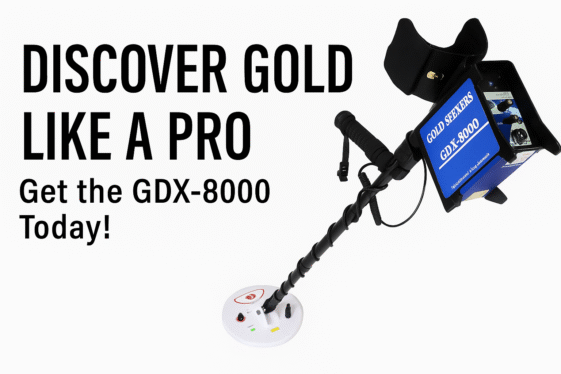
The GDX-8000 Gold Detector
Why it matters:
- engineered for mineralized Nigerian soils
- detects small and large nuggets
- penetrates deep weathered zones
- filters ground noise
- performs where cheap detectors fail
Who is using it:
- new prospectors
- landowners
- mining cooperatives
- exploration scouts
What they are achieving:
- confirming gold before spending money
- reducing wasted digging
- locating new hotspots
- reopening abandoned zones successfully
In a state where gold is still being discovered daily, guessing is expensive, verification is profit.
The GDX-8000 is not a luxury for beginners.
It is the difference between searching and finding.
8. FAQ
1. Is Zamfara still worth exploring?
Yes—new gold zones continue to emerge, especially in Anka, Maru, Bukkuyum, Dansadau, and other areas.
2. Can beginners start small?
Absolutely—prospecting does not require heavy machinery, only the right tools and guidance.
3. Do I need a mining license to scan land?
Scanning with consent is allowed, but proper exploration and extraction requires government permits.
4. Are old mining areas finished?
No—most were abandoned without modern detection and still contain recoverable gold.
5. Do I need geological experience to start?
No—simple visual indicators and reliable detectors make beginners effective.
Final Note
For a full national overview of gold deposits and trends, read our anchor resource: Nigerian Gold: State-by-State Guide.
READ ALSO:
Unlock Hidden Treasures: How Gold Detectors are Revolutionizing Mineral Exploration
17 Gold-Rich States in Nigeria: A Comprehensive Guide
The Ultimate Guide to Starting a Mining Company in Nigeria
10 Smart Ways to Find Gold on Your Land in Nigeria
Need a Mining License or Mineral Trade Permit in Nigeria? Here’s How We Can Help



Leave a Reply