

1. Introduction
If there is any stretch of land in Nigeria that keeps rewriting the country’s mineral history, it is the Anka–Maru gold corridor in Zamfara State. This is not just another mining zone; this is the heartbeat of Nigeria’s modern gold rush, where discoveries happen quietly, constantly, and sometimes accidentally.
Across villages and farmlands, ordinary soil keeps shocking landowners, revealing quartz veins loaded with visible gold. What many people do not realize is this:
Anka and Maru contain one of the most continuous, gold-bearing structures in West Africa; yet more than 80% of it remains unexplored.
Every artisanal pit, every abandoned shaft, every untested farmland is a possibility. That is why serious miners, cooperatives, exploration scouts, and resource-hungry investors are now flooding the area; not for rumor, but for repeatable results – even with the security challenges within that axis.
And the truth is simple:
Gold is no longer a mystery in Anka and Maru; but the next discoveries will not go to those who wait. They will go to those who search.
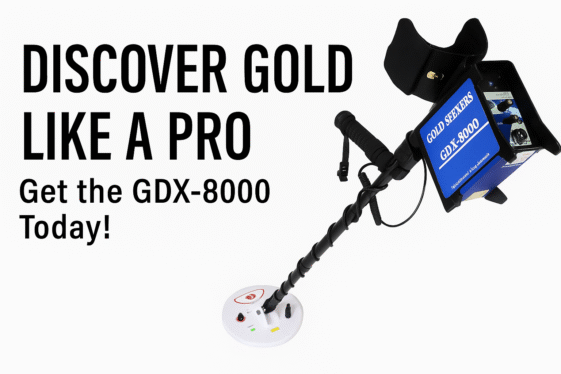
This guide shows exact locations, how to identify gold-bearing features, and the tools needed to find gold with accuracy, not luck; especially the GDX-8000 Gold Detector, now considered the most reliable detector for Nigeria’s mineralized terrain.
2. Geology of the Anka–Maru Belt
The Anka–Maru Belt is part of Nigeria’s legendary Schist Belt system, the same geological structure that connects Osun’s Segilola deposit to the goldfields of Kaduna, Niger and Kebbi. This is not random distribution; this is deep-seated structural control.
Key geological features include:
✅ 1. Greenstone-hosted gold
Gold occurs within:
- metasediments
- banded iron formations
- sheared volcanic rocks
These rocks are globally known for producing world-class deposits, from Ghana’s Ashanti Belt to South Africa’s Barberton.
✅ 2. Quartz-vein mineralization
The most common host is:
- milky white quartz
- often iron-stained
- brittle, fractured, and veined
Where quartz swarms occur, gold is never far away.
✅ 3. Regional shear zones
Anka and Maru sit on major crustal breaks, which act as pipelines for mineral-rich fluids.
These structures:
- stretch for tens of kilometers
- cut through multiple communities
- explain why deposits are continuous, not isolated
✅ 4. Alluvial and eluvial gold
Not all gold here is trapped in rock.
Surface discoveries have come from:
- dry stream channels
- seasonal riverbeds
- eroded slopes
- farm ridges
Meaning gold can be found without blasting or drilling, if you know where to look.
The implication is massive:
Anka–Maru is not a single deposit, but an unfolding gold province. Every month, every year, new pockets appear because the system is still unlocking.
🟡 Thinking of exploring for gold in Nigeria? Whether you’re a miner, landowner, or investor, the GDX-8000 Gold Detector is the trusted tool transforming local gold discovery across Nigeria and West Africa.
Detect deeper, find faster, and uncover real opportunities beneath your land.
👉 Order your Original GDX-8000 NOW – exclusively from the Nigerian Mineral Exchange (NME), Nigeria’s leading mining marketplace.
💬 Chat directly with our support team on WhatsApp: +234 8130799304
3. Exact Communities with Known Mineralisation
While the entire belt is prospective, certain locations have proven, repeat-recorded gold activity.
Here are the most significant zones:
✅ Anka Axis
Well-known high-yield communities include:
- Bagega
- Barayar Zaki
- Sabon Birnin
- Yar Gede
- Wuya
- Magaji
- Dakko
Characteristics:
- rich alluvials
- shallow eluvials
- scattered hard-rock quartz veins
- active artisanal pits around weathered schist
Many landowners have no idea their farmlands sit on gold-bearing ridges.
✅ Maru Axis
Major mineralized settlements:
- Malele
- Bindin
- Dan Kamfani
- Kurya Madaro
- Mayanchi
This is also the zone of the historic Malele Gold Mine, where visible gold has been recorded repeatedly.
Hard-rock mineralization is more dominant here, especially along:
- north-south shear planes
- ridges with quartz boulders
- old colonial-era trenches
✅ The Dansadau Belt
Stretching toward the forested margin, including:
- Unguwar Zaki
- Bungundu
- Kasuwar Daji
This corridor is vastly underexplored and rapidly attracting modern interest because:
- gold is shallow
- signals are strong
- terrain is detector-friendly
Key takeaway
Gold distribution in Anka–Maru is not random—if a neighboring village has gold, yours must be checked.
For miners, cooperatives, and exploration scouts, the biggest mistake now is assuming “we already know the rich spots.”
In 2025, new locations are still being uncovered every month. With improved security and simplified licensing process, that axis is going to be a hot economic zone in the near future.
4. How to Identify Gold-Bearing Structures
You don’t need to be a geologist to recognize indicators.
Here are the top visual clues that mean “test this land now”:
✅ 1. Milky quartz veins
Look for:
- white or smoky quartz
- iron-stained surfaces (reddish-brown)
- veins cutting across rock
- scattered quartz pebbles on soil
If quartz appears in clusters, the likelihood increases dramatically.
✅ 2. Sheared or crushed rocks
Gold loves:
- rocks that crumble easily
- surfaces with slick, polished planes
- zones aligned in straight trends
Shear zones are the real gold highways.
✅ 3. Iron-rich soils
Soils turning:
- reddish
- brownish
- purple-stained
These colors often indicate sulphide weathering, a classic gold companion.
✅ 4. Black sands in stream channels
Test dry streambeds for:
- heavy dark minerals
- magnetite
- ilmenite
Where black sands accumulate, fine gold may be hiding.
✅ 5. Old pits and abandoned trenches
Anywhere previous digging occurred, test again.
Why?
Because:
- older miners lacked precision
- many areas were worked blindly
- deeper or lateral extensions were ignored
Modern detectors now recover what was previously missed.
In today’s gold exploration, the person with the right tool, not the biggest shovel wins.
5. Best Tools for Accurate Gold Detection
Finding gold in Anka and Maru is now a science, not guesswork.
Here’s what works best in the terrain:
✅ 1. Ground-penetrating gold detectors
Because the soil is:
- heavily mineralized
- iron-rich
- noise-intensive
Low-grade hobby detectors fail instantly.
✅ 2. Deep-seeking pulse induction (PI) technology
Required for:
- detecting gold nuggets at depth
- cutting through mineral interference
- filtering ground noise
This is why serious miners are upgrading; not for luxury, but for results.
✅ 3. Hand tools for sampling
Essentials:
- rock hammer
- GPS device
- gold pan
- small shovel
- headlamp for shafts
But without a detector, you’re still searching blind.
6. Risks, Permits & Security Awareness
While Anka and Maru are active zones, prospectors must remain aware:
✅ 1. Secure movement
Never explore alone—always with:
- escorts
- local guides
- trusted cooperatives
✅ 2. Respect land ownership
Always:
- seek permission before testing land
- engage chiefs or community heads
- avoid entering active artisanal pits
✅ 3. Environmental caution
Do not:
- dig without backfilling
- contaminate water sources
- abandon open holes
Responsible exploration protects future access.
Prospecting is legal when done correctly under the law, and many cooperatives now operate within the Federal Government Artisanal Mining Formalization Policy; a safer pathway than informal mining.
7. Recommended Tool for Gold Prospectors
If there is one tool dominating the Anka–Maru gold rush, it is the GDX-8000 Gold Detector.
Why:
- built for Nigeria’s mineralized soils
- detects large and small gold nuggets
- penetrates deep weathered profiles
- filters ground noise
- performs where conventional detectors fail
Landowners are now using it to confirm the gold status of their farms before selling, leasing, or developing the land.
Miners, cooperatives, and exploration teams are adopting it because:
- accuracy = reduced wasted digging
- discovery = immediate negotiation power
- verification = investment confidence
In a region where gold is being discovered daily, the GDX-8000 is not a luxury, it’s insurance.
🟡 Thinking of exploring for gold in Nigeria? Whether you’re a miner, landowner, or investor, the GDX-8000 Gold Detector is the trusted tool transforming local gold discovery across Nigeria and West Africa.
Detect deeper, find faster, and uncover real opportunities beneath your land.
👉 Order your Original GDX-8000 NOW – exclusively from the Nigerian Mineral Exchange (NME), Nigeria’s leading mining marketplace.
💬 Chat directly with our support team on WhatsApp: +234 8130799304
8. FAQ
1. Is gold still being discovered in Anka and Maru?
Yes—new zones emerge every month, especially in underexplored ridges and dry streambeds.
2. Can landowners test their own land?
Absolutely—using a deep-seeking detector like the GDX-8000.
3. Do you need a mining license to prospect?
Prospecting can be done responsibly and with landowner consent, but formal operations require permits.
4. Does gold occur only in quartz?
Mostly, but alluvial gold can occur without visible quartz-that’s why detectors matter.
5. Are abandoned pits worth revisiting?
Yes—modern detectors often recover missed gold around old workings.
Final Note
For a full national overview of gold deposits and trends, read our anchor resource: Nigerian Gold: State-by-State Guide.
READ ALSO:
17 Gold-Rich States in Nigeria: A Comprehensive Guide
The Ultimate Guide to Starting a Mining Company in Nigeria
10 Smart Ways to Find Gold on Your Land in Nigeria
Need a Mining License or Mineral Trade Permit in Nigeria? Here’s How We Can Help



Leave a Reply