
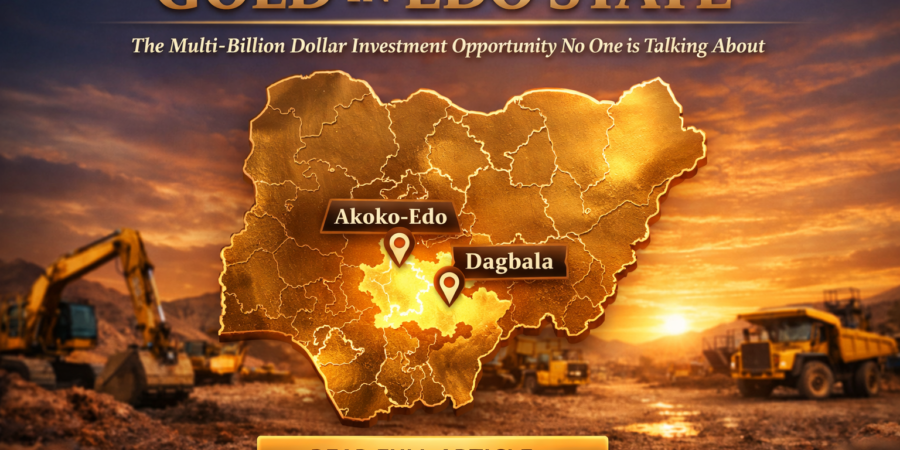
While the world looks toward the traditional “Gold Belts” of Northwest Nigeria, a quiet revolution is happening in the South-South. Recent field visits and geological assessments reveal that Edo State is sitting on vast, high-grade gold reserves that rival some of the most productive sites in West Africa.
For the savvy investor, Edo State isn’t just about limestone and cement; it is the next frontier for primary lode and alluvial gold exploitation.
1. The Geology: Why Edo State Has So Much Gold
Edo State sits on the Igarra Schist Belt, a Neoproterozoic metasedimentary-granitoid terrain. This geological formation is a continuation of the same auriferous (gold-bearing) structures found in the highly productive Ilesha Schist Belt.
- Primary Mineralization: Gold in Edo is primarily found in quartz-sulphide veins and stockworks hosted within gneisses and schists.
- Secondary Deposits: Massive alluvial and eluvial placers are found along major river systems, particularly the River Uza and its tributaries, where gold has weathered out of the mountains over millennia.
2. Key Gold Hubs in Edo State (Where the Action Is)
If you are looking for where mining activities are currently peaking, these are the “Golden Quadrants” of Edo State:
A. Akoko-Edo LGA (The Epicenter)
- Dagbala Community: Currently the most active gold hub in the state. The mineralization here is so significant that the State Government recently had to formalize security to manage the influx of miners.
- Ososo (Egbetua Community): Known for the “Odo Bush” sites, which have seen active (though often artisanal) mining for over 25 years.
- Uneme Eruru: A major site for high-grade alluvial gold.
B. Etsako East & West LGAs
- Okpella (Obu Mines): While famous for BUA and Dangote’s limestone wars, deep-level exploration has confirmed substantial gold deposits underlying the limestone strata.
- Iyuku: Emerging as a site for small-scale exploration and pit mining.
C. Owan East & West LGAs
- Uhumora & Ihievbe-Ogbe: Historical discoveries dating back to the early 2000s have recently been reactivated.
- Ogute-Okpa: A high-potential area with confirmed quartz vein mineralization.
3. The “Silent” Gold Rush: Current Mining Activity
Unlike other regions where mining is highly publicized, Edo’s gold rush has been driven by:
- Industrial By-products: Large-scale quarrying for other minerals has inadvertently exposed deep gold-bearing veins.
- Northern Influx: Professional artisanal miners from Zamfara and Kebbi have migrated to Edo, bringing advanced manual recovery techniques to the River Uza basin.
- Untapped Scale: Most current activity is artisanal (shallow pits). This means the primary lode deposits remain largely untouched and ready for mechanized industrial mining.
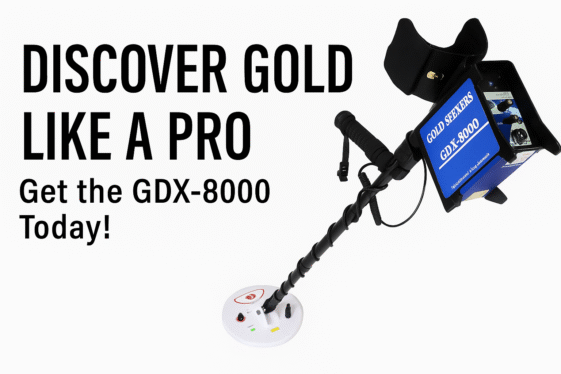
🟡 Thinking of exploring for gold in Nigeria? Whether you’re a miner, landowner, or investor, the GDX-8000 Gold Detector is the trusted tool transforming local gold discovery across Nigeria and West Africa.
Detect deeper, find faster, and uncover real opportunities beneath your land.
👉 Order your Original GDX-8000 NOW – exclusively from the Nigerian Mineral Exchange (NME), Nigeria’s leading mining marketplace.
💬 Chat directly with our support team on WhatsApp: +234 8130799304
4. Why Invest in Edo State Gold?
For investors looking to replicate the success of projects like the Segilola Gold Mine, Edo offers several strategic advantages:
- Proximity to Infrastructure: Unlike the remote Sahelian gold fields, Edo is well-connected by road to major ports and has a more developed industrial ecosystem (thanks to the cement industry).
- High Grade-to-Depth Ratio: Early assays suggest that the gold-to-quartz ratio in areas like Dagbala is economically viable for mid-to-large scale processing.
- Ease of Licensing: The Nigerian Mining Cadastre Office (MCO) still has available “Greenfield” squares in Edo, unlike the saturated maps of Osun and Oyo.
- Security & Policy: The Edo State Government has shown a proactive stance in protecting mining leases and formalizing artisanal cooperatives to ensure a stable environment.
SEE ALSO: High-Recovery Gold Washing Machine for Sale in Nigeria
5. How to Get Started (The Roadmap)
To legally and profitably mine gold in Edo, follow our Gold Mining Investment Advisory
- Secure an Exploration License (EL): Through the Ministry of Solid Minerals.
- Community Consent: Engage with the traditional rulers (e.g., the Okaku of Dagbala) early to ensure a social license to operate.
- Modern Prospecting: Skip the manual pits. Utilize high-sensitivity detectors (like the GDX-8000) or geophysical surveys to map the strike length of the quartz veins.
- Value Addition: Edo is ripe for a gold smelting and refining hub to service the South-South and South-East gold trade.
Conclusion: The Future is Golden
Edo State is no longer a “sleeping giant” in the mining sector—it is wide awake. The combination of the Igarra Schist Belt’s geology and the state’s industrial readiness makes it the most attractive gold destination in Nigeria for 2026.
Expert Tip: Don’t wait for the mainstream media to catch on. The real wealth in Nigerian mining is found where the deposits are proven but the competition is still low. That place is Edo.
READ ALSO:
High-Recovery Gold Washing Machine for Sale in Nigeria
Nigeria Mining Investment Intelligence Report
How to Register a Mining Company in Nigeria (Step-by-Step Guide – 2026)
Mining License Application in Nigeria: Requirements, Process & Costs (2026 Update)
The Ultimate Guide to Nigerian Mining Information & Resources (2026)
How to Start a Mining Company in Nigeria (2026 Step-by-Step Guide)
Requirements for License to Purchase and Possess Minerals in Nigeria (2026)
17 Gold-Rich States in Nigeria: A Comprehensive Guide
10 Smart Ways to Find Gold on Your Land in Nigeria
Need a Mining License or Mineral Trade Permit in Nigeria? Here’s How We Can Help


Leave a Reply