

Exploring how digital market infrastructure can unlock mining investment, mineral opportunities, and ecosystem development across Nigeria’s solid minerals sector.
Nigeria possesses vast mineral resources and mining opportunities across its solid minerals sector. Deposits of gold, lithium, lead, tin, ilmenite, iron ore, limestone, gemstones, barite, and several other minerals are found across different parts of the country. Many of these resources are increasingly important to global industrial supply chains.
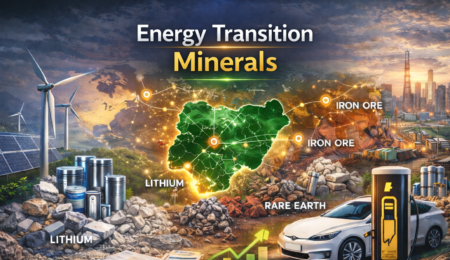
As the world transitions toward renewable energy technologies, electric vehicles, advanced electronics, and modern infrastructure, demand for many minerals continues to grow rapidly.
Countries around the world are strengthening their mining sectors in order to participate in these emerging opportunities.
Nigeria is geologically well positioned to benefit from this shift.
However, realizing the full potential of Nigeria’s mining sector requires more than mineral deposits alone. It requires systems that organize information, connect industry participants, and improve visibility for opportunities across the ecosystem.
In other words, it requires market infrastructure.
This is the vision behind the Nigerian Mineral Exchange (NME).
Nigeria’s Mineral Resources and Mining Potential
Nigeria hosts commercially significant deposits of several minerals that support both global supply chains and domestic industrial development.
Some of the most notable mineral resources in Nigeria include:
- Gold
- Lithium
- Tin and Columbite
- Iron Ore
- Limestone
- Barite
- Lead and Zinc
- Gemstones
- Rare Earth Minerals
These minerals are essential inputs for industries ranging from construction and manufacturing to electronics, energy systems, and advanced technology.
For example, lithium has become one of the most sought-after minerals due to its role in battery production for electric vehicles and energy storage systems. Tin remains an essential component of electronics manufacturing. Gold continues to play a major role in global commodity markets.
Meanwhile, industrial minerals such as limestone, silica, feldspar, and kaolin are essential for domestic industries including cement production, ceramics manufacturing, glass production, and chemical processing.
This means that Nigeria’s mining sector is important not only for exports, but also for supporting domestic industrial development and manufacturing supply chains.
Despite this opportunity, the sector remains underdeveloped relative to its potential.
The Structural Challenge in Nigeria’s Mining Sector
Much of the discussion about Nigeria’s mining industry has traditionally focused on exploration potential and licensing frameworks. While these are important components of sector development, they do not fully explain the structural challenges facing the industry.
In reality, one of the most important constraints affecting mining investment in Nigeria is fragmentation across the ecosystem.
Information about mineral opportunities is often scattered. Investors may struggle to identify credible projects. Mining operators sometimes find it difficult to locate specialized services such as mineral laboratories, drilling contractors, or geological consultants. Equipment suppliers and service providers frequently lack visibility within the industry.
At the same time, mineral buyers and traders looking for new sources of supply may face similar challenges in identifying reliable partners.
In many ways, the sector lacks organized market infrastructure that connects participants across the mining ecosystem.
Without these systems, opportunities remain hidden, collaboration becomes difficult, and industry growth slows.
What Market Infrastructure Means
Market infrastructure refers to the systems that allow participants in an industry to interact efficiently.
In many sectors of the global economy, specialized platforms and institutions perform this role.
Financial markets rely on stock exchanges and trading platforms. Agricultural industries depend on commodity exchanges and digital marketplaces. Logistics sectors operate through freight platforms that connect cargo owners with transportation providers.
Mining industries around the world also rely on various forms of market infrastructure.
These systems often include:
- industry intelligence platforms
- mineral exchanges and trading networks
- professional service directories
- technical information repositories
- investment discovery platforms
Together, these systems help organize information, improve visibility for opportunities, and facilitate connections between participants.
For emerging mining economies like Nigeria, building these systems can significantly improve how the sector functions.
Mining Opportunities in Nigeria
Nigeria hosts a wide range of mining opportunities across different minerals and regions.
Exploration and development opportunities exist across multiple mineral categories.
Gold Mining Opportunities
Gold deposits occur in several states including Zamfara, Edo, Kebbi, Kwara, Niger, Nasarawa, and Osun. These regions have attracted increasing interest from exploration companies and investors seeking new gold resources.
Lithium Opportunities
Lithium discoveries in parts of Nasarawa, Kaduna, Kogi, Kwara, and Plateau states have drawn attention from international investors interested in battery mineral supply chains.
Iron Ore Development
Nigeria possesses substantial iron ore deposits, including well-known occurrences such as the Itakpe iron ore project in Kogi State. These resources have the potential to support domestic steel production.
Industrial Minerals
Nigeria’s industrial minerals sector includes limestone, silica, feldspar, kaolin, and barite. These minerals are essential inputs for cement manufacturing, ceramics production, construction materials, and chemical industries.
Gemstone Deposits
Nigeria is also known for gemstones such as tourmaline, aquamarine, amethyst, emerald, sapphire, and topaz. These resources represent opportunities for both mining and mineral trading.
Despite the presence of these opportunities, many remain difficult to discover due to the fragmented nature of industry information.
This is where organized market infrastructure can make a significant difference.
Digital Infrastructure and the Future of Mining Markets
Across many industries, digital platforms have transformed how markets operate.
Online platforms now connect buyers and sellers, organize industry information, and improve access to services. In transportation, digital marketplaces connect cargo owners with logistics providers. In finance, online trading platforms allow investors to access global markets.
Mining markets are gradually experiencing similar transformations.
Digital infrastructure can help organize mining sector intelligence, improve visibility for opportunities, connect investors with projects, and enable collaboration between miners and service providers.
For emerging mining economies like Nigeria, digital platforms offer an efficient way to develop market coordination systems.
This is where the Nigerian Mineral Exchange enters the picture.
The Nigerian Mineral Exchange Platform
The Nigerian Mineral Exchange (NME) was developed as an effort to help organize Nigeria’s mining ecosystem through digital infrastructure.
The platform aims to improve access to mining intelligence, increase visibility for opportunities, and strengthen connections across the sector.
The Nigerian Mineral Exchange currently hosts:
- mining sector information resources
- research publications and industry insights
- mineral listings and trading opportunities
- mining equipment and service provider directories
- mining opportunity listings for investors
The platform is accessible online at:
www.nigerianmineralexchange.com
By bringing together information, services, and opportunities within a structured environment, the platform helps improve visibility across Nigeria’s mining ecosystem.
Connecting Nigeria’s Mining Ecosystem
Mining projects rarely succeed in isolation.
Successful mineral development requires collaboration between multiple participants including:
- exploration teams and mining companies
- mineral laboratories and geological consultants
- drilling contractors and equipment suppliers
- environmental specialists and regulatory advisors
- investors and project developers
- mineral traders and industrial buyers
Platforms that organize industry information and improve ecosystem visibility can help strengthen these connections.
Over time, improved connectivity across the ecosystem can contribute to stronger investment discovery, more efficient collaboration, and increased sector transparency.
Beyond Mining: The Broader Mining Economy
A thriving mining sector stimulates growth in several related industries.
These include:
Mining Support Services
Geological consulting, drilling operations, environmental monitoring, engineering services, and equipment supply.
Mineral Laboratories
Reliable mineral testing and analysis for exploration programs and mineral trade verification.
Mineral Processing and Value Addition
Beneficiation and processing activities that add value to mineral resources before export or industrial use.
Industrial Raw Material Supply
Supplying domestic industries with minerals used in manufacturing and construction.
Mineral Trade Networks
Connecting mineral producers with buyers in both domestic and international markets.
Market infrastructure helps coordinate these sectors by improving access to information and increasing visibility across the ecosystem.
The Long-Term Vision for Nigeria’s Mining Market Infrastructure
Nigeria’s mineral resources represent a major opportunity for economic diversification and industrial development.
However, unlocking this opportunity requires more than exploration and extraction alone. It requires systems that connect information, services, investment opportunities, and mineral trade.
Market infrastructure plays a central role in enabling these connections.
The Nigerian Mineral Exchange represents an early step toward building this infrastructure.
By organizing mining intelligence, improving visibility for opportunities, and connecting participants across the ecosystem, the platform aims to contribute to a more structured and accessible mining sector in Nigeria.
Explore Mining Opportunities and Industry Services
The Nigerian Mineral Exchange provides access to mining intelligence, mineral listings, and industry services across Nigeria’s mining ecosystem.
Explore the platform:
www.nigerianmineralexchange.com
Obinna Ede
Founder & System Architect
Nigerian Mineral Exchange
READ Also:
How to Invest in Nigeria’s Mining Sector: A Step-by-Step Guide for Foreign Investors
Nigeria’s Critical Minerals and the Global Energy Transition
Top Mining Opportunities in Nigeria: A Guide for Investors and Industry Participants

Leave a Reply